What led you to pursue a career in research?
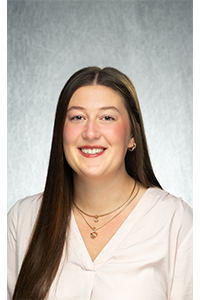
Since I was young, science has always been my favorite subject, but I had never known what path I wanted to pursue within science. I didn't know that a career in research was possible, or what it looked like. In the spring semester of my junior year, I joined a lab and began undergraduate research. I received a fellowship for this work which gave me the opportunity to continue my research full time over the summer. It was through this experience that I really fell in love with research and realized that it was possible to pursue it as a career.
During my time in undergraduate research, I also had the opportunity to attend conferences and present my work. Here, I realized that I really enjoyed talking with others about discoveries that were being made both inside and adjacent to my field. Being able to share my work, learn about the research of others, and engage in conversations about emerging science further solidified my desire to pursue a career in research.
What is the focus of your work?
My work has focused on protein structure and function. During my undergraduate research, I studied alkaline phosphatase, focusing on the metal ion dependency of the enzyme. I worked to connect functional differences in metal ion binding and catalysis to structural variation between mammalian and bacterial phosphatases. I was excited to join the Miller lab to expand my research experience by studying a different class of proteins and to further explore how protein structure and interactions between proteins influence physiological processes.
What excites you about the research environment in Molecular Physiology and Biophysics?
I am excited to be working in the Molecular Physiology and Biophysics department because everyone has been so welcoming, supportive, and passionate. I also feel grateful to be a part of a university known for rigorous and impactful biomedical research. Having access to new equipment and techniques that were previously unavailable to me, as well as the opportunity to collaborate with other researchers through the connections within the department is really exciting.
How do you hope your research will impact the field and the broader community?
Broadly, I hope that my work can contribute to understanding the mechanisms of disease and infection and identifying targets for the development of pharmacological treatments. I hope my work will translate into new approaches to treatment and ultimately improve human health.
Additionally, I would like to mentor other passionate scientists who are unaware of the opportunities that are available. I took a somewhat unconventional path to where I am today, and I want to help others who are new to research develop connections and confidence in themselves and their work. The connections that I have made through my own experiences and the mentorship I have been fortunate to receive have really changed my life and shaped my path as a scientist. I want to support others finding their way as well.